Friday, February 27, 2015

Leaping over Life’s Hurdles


We all must handle tests—academic and otherwise—and make timely decisions. From a very early age, I learned to make fast decisions because of the uneasy living conditions in which I was raised during the Lebanese civil war. 

One such test I recall is when I had an oral exam in Mathematics at the university. All was quiet and normal that day. One after another, my fellow students solved their exercises, passed and went on their merry way. But suddenly and just before my turn arrived, heavy shelling started. It was not very close to the university campus, but I knew that it would reach us soon.

The instructor handed me my exercise and said I had 10 minutes to solve it. I looked at it and in the splash of a moment I found the solution, to his surprise and mine. I didn't know how I managed to solve it that quickly but I was sure of one thing: I wanted to leave that place and get back home as soon as possible. Our house in the Beirut suburbs was scarcely safer than the university campus, but being surrounded by my parents and other loved ones gave a sense of security and safety. 

Each one of us goes through different tests in life which are unique and challenging. But such tests have certain things in common. I have learned from the experience of others and would like to humbly offer some tips of my own. In order to be able to deal with crucial tests it is useful if you can: 
  • Remain calm when put under sheer pressure. Face the problem and never run away. 
  • Practice and be ready for whatever may happen. Avoid negative thinking and visualize yourself conquering your problems and fears. 
  • When confronting a fork in the road, it does not matter whether you go right or left. What matters is never to look back and to keep going. Let “forward” ever be your watchword. 
  • Never despair and remain confident that things will work out one way or another. 
  • Stay focused and pay attention to what really matters, and ignore any background noise. 
  • Believe in yourself and know that you are up to the task—whatever it may be. 
  • Seek advice and surround yourself with people you trust. This is far better than sitting alone with your thoughts, fears and worries.
"An expert is someone who has succeeded in making decisions and judgments simpler through knowing what to pay attention to and what to ignore." ― Edward de Bono

Thank You RAP for your valuable Comments!
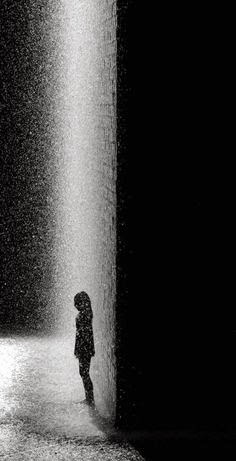
Image: Standing in the Rain – by Ana Livingston

Friday, February 20, 2015

Trade off between Connectivity and Privacy


While some people consider that the internet is a threat to human civilization and refuse to use social media due to their fear that their privacy would be violated, many others take benefits of its wealth.


I have always enjoyed connecting with people whether in real life or “virtually.” At work, I enjoy my advising part of my job and use social media to connect with my advisees and friends. Of course the Internet is like a glass house where everything is transparent and there is no place to hide. The multitude ways we give away information about ourselves has not only increased our social visibility and made it easier for us to find each other, but also to be examined in public.


Remaining disconnected can bring blessed privacy and comfort to some. Conversely, it can be a sad and loss of many wonderfully joyous moments and important opportunities. We want nothing more than to connect, and the companies that are connecting us electronically want to know about us especially that we are handing in an enormous amount of data about our daily life, much of which we might not trust our friends with. So what am I really gaining from being part of this giant new world? 


Social media for me is just like a meditation session, it allows me, after a long day of work, to reflect on my day and the world. Maybe all of us like to have our personal moments, a little private corner created over the Ether where we could go off alone without fears. To day-dream and speak out our mind. To realize who we are and the extents of the good we are capable of. 
“Using the Internet as a vehicle to work with people is fascinating. It's sort of a Pandora's box of energy for me.”―Jon Anderson
We are all aware that the advances of social media applications constitute a greater danger to our privacy as individuals. Privacy by definition is that there are things that belong solely to us and should not be open to the scrutiny of others because the root of privacy is that not everything belongs to everyone.


However, social networking survives on connectivity and sharing of information. Indeed, social media is dependent on the disclosure of our personal information and if this is valued more highly than privacy, then the protection of our individual data over the Internet might become unconfirmed.


“To be left alone is the most precious thing one can ask of the modern world.” ― Anthony Burgess


On the one hand, many of us fear what others read and know about us. And on the other hand, we fear that what people miss about us (after reading), could be filled with assumptions. We might assume that they care so much about us, by what they do or don’t read about us. Then, the mixture of our own worries and egos overshadows that what other people think of us is their problem not ours, to worry about.


Finding a balance between privacy and connectivity is complicated, and there is a trade-off between more security and the benefit of being active on the net. Furthermore, gaining trust in social media is essential and needs time to be built up:

  • Know your strengths and weaknesses, and be open about them. Being vulnerable shows that you are human.
  • Tell the truth. Don’t lie. “When in doubt, tell the truth.” – Mark Twain
  • Distinguish facts from personal opinions. Using our imagination to fill in the missing bits could distort the reality of things.
  • Do now what you say you would do. Procrastination could kill your credibility.


Monday, October 13, 2014

Leadership Skills:Super-connectivity is a Two-way Energizer


Most of my work at the university revolves around communication(s) as I teach Computer Network courses and work as a department head and academic advisor to a large number of students. Working in academia is a blessing for me as it allows me to be in contact with and serve many students on a daily basis.

An example of being so blessed is as follows. In my first year of teaching, there was a student, Nabil, who missed the first couple of lectures of my course. He came to my office, obviously quite worried about how I would react to his absences. When I saw his anxious face, I asked him gently why he had missed the lectures and listened to him patiently. He told me that he was working on a part-time basis to pay for his education fees, and the company sent him abroad between the two semesters. As a result, he had to miss a couple of his lectures. He was a senior student and was due to graduate by the end of that semester—assuming he passed all his courses. The university had a strict rule on the number of allowed absences, and Nabil had reached that limit. After realizing that the work he was doing was actually relevant to the course I was teaching, I allowed him to join the class and offered help with the missed materials. Nabil passed the course and graduated that semester. During the graduation ceremony, he ran to me and thanked me profusely. I felt at that moment very grateful for my teaching career because it allows me to make a difference in people’s lives.

To Continue reading this post click here please ( Todd Nielsen's  International Leadership Blogathon )


Wednesday, January 8, 2014

Connecting Bits, Words and People


As the head of my university’s computer science department, I try to keep a protective eye on many students. One of them recently visited me for the first time and asked for help. I inquired whether he was a new student, and he answered that this was in fact his third year at the university but he had only passed a few courses and was at serious risk of being terminally suspended. So I checked his transcript to identify his problem and was shocked by what I saw. Why had he not sought help earlier? His answer was that he previously had bad experiences with two different advisers and thought no one could ever help him. I wondered aloud what had gone wrong with them, and he said in a melancholy way, “They did not care to listen or help!” 
“Much unhappiness has come into the world because of bewilderment and things left unsaid.”  ― Fyodor Dostoyevsky
Most of my work at the university revolves around communication(s). Communication and communications are two similar words—differing only with the letter “s”—but their usages are quite different. While communication relates mainly to connecting people through speech and words, the latter relates to connecting electronic devices through the transmission of bits.

As I teach Computer Network courses, work as the department head and dispense academic advice, I frequently cross the boundaries between the two different worlds of communication, exchanging knowledge, skills and wisdom between these two worlds; I will explain how I do so.

The basic foundation of both communication and communications is about creating a link between two entities. The quality of that connection is highly dependent on the predisposition of the entities involved. After establishing the connection, one of the entities starts to talk while the other needs to listen. So here again, whether the second node is listening or just hearing makes a big difference in the overall connection. 
"Knowledge speaks, but wisdom listens." — Jimi Hendrix
Now, let me go beyond establishing a link to creating a reliable network among the involved members. By means of an analogy with basic computer network protocols, I can state that creating a network requires the following tasks:
  • Connect with everyone, one person at a time, listen well and learn about their status. 
  • Synchronize the connections; make sure that people can understand each other.
  • Balance the flow of information and ensure that no one is overwhelmed with the sent data or requested jobs.
  • Be constantly aware of the possible occurrence of errors and give a helping hand in solving them.
  • Be the glue among the different members, and create a resilient and efficient inter-network in spite of any possible differences.
  • Provide a good interface to the external world by using all available modes of interconnection and social media.

I enjoy my work greatly because it enables me to move constantly between the two realms of communication and allows me to have a high level of interaction. Students talk to me, and I listen intently and empathize with them. They share with me their joy and problems. When I take time to listen, it's amazing what I can learn from what they say and most importantly what they haven’t said.

Part of being a good communicator, or a superconnector as we call it now, is the ability to accept others for who they are and acknowledge that we are all different in the way we perceive the world, in what we like or dislike.  It is also important to let others feel that they are not alone, we care for them and they can trust us. In this way, they can talk to us freely and their problems become less overwhelming and manageable. Just like my student who decided to change his major after our discussion and promised to keep coming for advice and help. 
“Let's remind ourselves that being alive requires an effort far greater than the simple fact of breathing." — Pablo Neruda


Seeing the Big Picture


In my role as a professor, there is something I do at the beginning of each semester. The first class of any course is devoted to informing my students of just what the course entails: I give them the big picture. Depending on its clarity the students decide whether to take or drop the course. 

“When leadership brings clarity, decisions become unmistakable.” –Lolly Daskal
In every aspect of our daily lives we are bombarded by data from every direction. We can’t use all the data we collect, but we apply our own intelligence and judgment when a decision has to be made. Our brains have to process this influx of disjointed data, editing them as we go. This is facilitated by our intuition and imagination.

As with visual information where one can visualize a picture even though some of the pixels are missing, our imagination is used to fill in the gaps in the available patterns of non-visual data, letting us draw conclusions and make judgments based on uncertain and incomplete information. How accurate is the big picture that we are drawing? To what degree is it influenced by our moods and other subjective factors?

“One person’s data is another person’s noise.” – K.C. Cole 

Data are instances of basic events and existences. The one that is favored tends to survive and matures just like wine. Storytelling is a major way to help us render data meaningful, as it provides a soul and context to our data. 

Things get done only if the data we gather inform and inspire us and others. Our goal, therefore, is to turn data into information, and information into insight. However, with too little data, we are unable to make any conclusion that we trust. Even with loads of data, some inferences may not be correct. Collecting a mountain of data should not be the goal; it’s to create a clear and trustworthy big picture that matters. 

“Facts do not cease to exist because they are ignored.” – Aldous Huxley 

What is now called “big data” has become part of everyone’s life. Current communication systems ravenously collect information about people and businesses. We all have volunteered volumes of our personal data through social media services in addition to loads of geo-spatial data arising from the tracking of our smart phones. 

Big data can be used for the extraction of some generalities that are useful in some social and business fields. For instance, the discovery of previously unknown market segments, such as men driving home from work stop to buy diapers and beer.

However, Big Data is not only about the extraction of generalities it could identify individuals, their names, birth dates, and take advantage of this particular information. An unfortunate scenario is when the collected data leads to information falsely associated with us such as when a credit agency refuses to give us a loan because we wrongly fit an obscure violation model.

Also big data could be used to analyze current and historical facts and behavior to make predictions about future events. An embarrassing example for predictive analysis is when social media services know that your daughter is pregnant before you do.

Tell the story
Hence, in order to bring our data to life we need to effectively tell its story. Big data storytelling, like any other kind of storytelling, has certain rules that can determine its success or failure. Here are the four most important ones:
  1. Concentrate on the essence of your story and skip the unnecessary details. Simplify and combine data. “The ability to simplify means to eliminate the unnecessary so that the necessary may speak.” –Hans Hofmann
  2. Disregard the obvious as no one is interested in simple facts. "He who would search the pearls must dive below." – John Dryden
  3. Summarize don't refine or twist facts to suit your own theories. There is a natural tendency to exploit big data and ignore that it’s illegal to misuse it. This can result in faulty inferences with some potential negative outcomes that could extend far beyond the individual, but to affect the social, economic, and political sectors.
  4. Empathize with your audience. Finish your story within the time limit and let go even if it’s not perfect. Old information is of little if any value. Remember, your readers can always extrapolate from your story.

Successful interpretation of big data requires efficient storytelling. Without a human interface, data will only be a major source of confusion and false interpretation. It’s up to us to know how, why and when to use it.


Thursday, September 5, 2013

Dome, Sweet Dome


This is a guest post by my friend Richard Pennington. I have known Richard many years back through Social Media. Richard is a Sport Historian who wrote several books like "Breaking The Ice", "For Texas, I will" and many others. Richard currently lives and works in South Korea. You can read from Richard by accessing his website  http://richardpennington.com/

In Xanadu did Kubla Kahn a stately pleasure dome decree—Samuel Taylor Coleridge, 1797

Exactly 170 years after Coleridge wrote his famous poem about the mighty Khan, my grandfather “Papaw,” my uncle Gary, my aunt Dot, my cousins Dennis and Shannon, my father Lynn, my older brother Randy and I formed a two-car caravan headed southeast on Highway 45 from Dallas to Houston. It was the summer of 1967. Our somewhat struggling middle-class family did not take many vacations, so this was a big deal. Dennis, Randy and I had bought “racing stripe” T-shirts and wore them on the two-day trip to Texas’ biggest city.

Since the Washington Senators’ transformation into the Texas Rangers—based in the Dallas suburb of Arlington—was five years in the future, none of us had ever seen a major league baseball game. The Astros were facing the Atlanta Braves, but I remember nothing about the game. It’s a shame that no effort was made to preserve the next day’s Houston Chronicle or Dallas Morning News, so all the specifics have faded away. Who were the starting pitchers, who homered, who won the game? I have no idea. What I do remember is that all seven of us were suitably overwhelmed by the setting: the Harris County Domed Stadium, a.k.a. the Astrodome, completed just two years earlier at a cost of $31 million. We were watching indoor baseball! An architectural and engineering marvel, its roof spanned 710 feet. The Dome, embodying the optimism and zeitgeist of Houston at the time, was cavernous, gawdy and futuristic, way over the top. Judge Roy Hofheinz, the man most responsible for its conception and construction, wanted us all to have that wide-eyed reaction.

While the Astrodome hosted basketball—most famously the University of Houston’s 71-69 defeat of UCLA on January 30, 1968—, wrestling, rodeos, tractor pulls, heavy-metal concerts, political conventions and a multiplicity of other events, it was primarily about baseball and football. The Astros played home games there every season between 1965 and 1999, the Houston Oilers called it home from 1968 to 1997, and the UH Cougars did so from 1965 to 1997. By the 1990s, this famous facility was vacated in quick order by its three main tenants. The Astros, with a generous boost from tax dollars, built Enron Field (since renamed Minute Maid Park). The Oilers did more than move to a different part of the city, they left Texas entirely. Owner Bud Adams had been begging to have the Astrodome updated or, better yet, that he get a new stadium like the Astros had. He called Houston’s bluff and high-tailed it to Nashville as his team became the Tennessee Titans. The University of Houston was drawing small crowds there and thus chose to host football games at Robertson Stadium on campus. The last actual event at the Astrodome took place in 2003. Two years later, it was opened for 23,000 evacuees from Hurricane Katrina.

For more than a decade now, the fabled Astrodome has been sitting vacant, gathering dust and looking increasingly forlorn. The number of suggestions for its re-use is long. A hotel? A convention center? An amusement park? A shopping mall?  An indoor ski resort?  A casino? A space-age museum? Architects, urban planners, editorial writers and plain-Jane citizens have had their say, but Houston cannot seem to move on the issue. Any plan would cost a lot of money, far more than its initial investment 50 years ago.

Public perception of the Astrodome really sank in 2002 when Reliant Stadium opened virtually next door. This, a $352 million facility with a retractable roof and 196 luxury boxes, is home to the Houston Texans, an NFL expansion franchise to replace the departed Oilers. Its 71,000 seats are perfectly aligned and close to the field, which could not be said for the Astrodome as a football stadium. It was never ideal for the gridiron game.

Nearly $4 million is spent every year for basic maintenance of the Dome, which makes little sense. The question of its fate is heating up since Super Bowl 51—sorry, I just cannot do the Roman numerals—will take place at Reliant Stadium in February 2017. NFL commissioner Roger Goodell visited Houston not long ago and met with city and county officials, along with Texans owner Bob McNair. Goodell tried to sound diplomatic by saying that local people should decide what to do with the Astrodome, but his true feelings were not hard to discern. He regards it as a pug-ugly white elephant. Notwithstanding the fact that it is structurally sound, the Dome may be facing its final days. The commish, whose opinion carries significant weight, says the land on which the Astrodome sits just west of Reliant Stadium should be put to better use, such as parking. Yes, the iconic Astrodome, the co-called eighth wonder of the modern world, may soon be razed and turned into something as prosaic as a parking lot. 

The National Trust for Historic Preservation has compiled a short list of the USA's most endangered historic places, and the Astrodome is on it. Some romantic-minded citizens call the stadium Houston's Eiffel Tower, a signature landmark. Surely , they aver, it will not be torn down. And yet no financially viable option has been presented. Houston, a city that has embraced its reputation for swaggering ambition, may—and I hate to say, probably will—allow the wrecking ball to swing. If and when that happens, it will be a major failure of civic imagination. 
Monday, August 26, 2013

Teacher, Do You Know Big Bang?


This is a guest post by my friend Richard Pennington. I have known Richard many years back through Social Media. Richard is a Sport Historian who wrote several books like "Breaking The Ice", "For Texas, I will" and many others. Richard currently lives and works in South Korea. You can read from Richard by accessing his website  http://richardpennington.com/


Five years ago, I was doing my best to inspire reluctant Daegu kids to read, speak and write in English. In a few cases, I may have been successful. It was a two-way street, as I learned things from them. I had not been in the classroom long before one black-haired girl inquired breathlessly, “Teacher, do you know Big Bang?” I was then unfamiliar with that all-male musical group, but I went to Google and got hip. Ah, K-pop. It seems to be on every other television channel. And until recently, a music store stood across the street from my apartment. It hosted monthly gatherings of K-pop bands and scores of their enthusiastic female fans. I accosted a woman in the street and asked who they were. These guys must be really big, I told her. No. She informed me that they were newbies, just beginning on what they hoped would be the path to stardom. The girls were begging for autographs, shrieking and taking cell-phone videos of young men who had not yet done anything. Color me puzzled.


Now admittedly, there is a generational issue here as I am older than the performers and nearly all of their fans. A cultural difference surely is involved as well; were I of Korean descent, I might have a much greater appreciation for K-pop. But I honestly doubt it. K-pop seems so very shallow to me. These big companies have a system for choosing and promoting boy- and girl-bands. (They do seem to be exclusively single-gender.) With an eye on recent trends, they hold tryouts, choose a few good-looking kids and then give direction. The cut of their hair is dictated, as well as their clothes, their singing style, their dance moves, the personalities they project to fans and the media—everything. They are even told how to preen and pout. Many who seek that extra something undergo plastic surgery. It seems completely artificial to me, and I am a person who is inclined to like, admire and respect things Korean.


One may fairly contrast it with the system in Cuba. There, the singing, the dancing and the playing of instruments is learned from the ground up. It is organic, rich, deep and polyrhythmic. I would dare say contemporary Cuban music has soul. There are no businessmen in Havana seeking to manipulate the popular music scene. It happens and evolves naturally.


I despaired after reading a news article recently about the Gangnam district where I live in Seoul. It says that more than 100 hip-hop dance schools operate here, and the number of teenagers attending them is on the rise. Hagwons that once taught ballet, piano or classical guitar have given way to establishments that emphasize how kids can impress the aforesaid businessmen and become K-pop stars. Some of them attend classes every night of the week and spend their spare time studying K-pop videos on YouTube.


Korea, like all countries, has problems, some of them quite serious. Our best and brightest should be focused on solving those problems and creating a better future. We emphatically do not need them wasting precious time and energy on puerile dreams wherein they might become a part of the next Girls Generation, Super Junior, SHINee, TVXQ or T-ara—regardless of the fact that if they are among the chosen few, they will be awash in money and adulation, and sell out Madison Square Garden.

What’s that sound, you ask? It’s the sound of me, whistling in the dark. 

Friday, August 9, 2013

Embracing Diversity and Cross-Cultural Living


I was lucky to be born in a home full of diversity! While Mum is a very down-to-earth, hardworking and positive person, Dad was a big dreamer, good in sciences and the arts but not a practical person. This odd mixture led to five kids with totally different skills and orientations. Coming at the end of the line, with two older sisters and two older brothers, gave me a certain advantage over others because it taught me how to deal with diversity for as long as I can remember.  And, as I was born four years after my youngest brother, I was considered the “pet” of the house, where everybody wanted to take care of me and teach me what they loved. The best experience from all of this was the chance I had to mingle freely among them and their friends at home. It was always very busy with young aspiring artists, scientists, politicians and craftsmen.

“I think… if it is true that there are as many minds as there are heads, then there are as many kinds of love as there are hearts.” — Leo Tolstoy
One other aspect of my life that helped nurture my diversity skills was living in London during the 1990s. After getting married, my husband and I moved there to pursue our graduate studies. We didn’t have enough money to rent our own flat, so we had to share a house with a large number of post-graduate students coming from different countries. I remember students from Italy, Greece, Morocco, Germany, India and China. Of course, there were some Brits in the group as well.  Our connection with all of these students came naturally because every day we had to share the kitchen, the TV lounge and other facilities. As a result, my first years in London were full of extraordinary encounters. I mingled with everyone, made many friends, organized parties, and learned some great recipes no cook books could have taught me. And, if I close my eyes for a moment, I can recall our students’ house next to Earls Court underground station, a very busy multi-ethnic area with beautiful pubs and exotic shops and restaurants. 

Moreover, my colleagues at the university came from various ethnic groups. So, I spent a good deal of my time mixing and learning from my housemates and classmates. This made my living and studying in such a mixed environment, a challenging and invigorating experience. It kept me on the creative edge and generated the best of me—whether in socializing or in academic matters.

Finally, toward the end of my Ph.D. research, my husband was offered a job back home. Thus, I was left alone in London for 9 months. Although I could have lived by myself, I decided not to do so and moved to an international student house where my previous experience of meeting, connecting and learning from people with very different backgrounds started all over again.

"He who is different from me does not impoverish me—he enriches me. Our unity is constituted in something higher than ourselves—in Man.... For no man seeks to hear his own echo, or to find his reflection in the glass." — Antoine de Saint-Exupéry

Diversity can bring out the best of everyone if only we knew how to embrace it. However, standing against it can leave us broken and shattered.  No better example could be given for that than my country which hosts different religions and sects. The unfortunate result of taking sides, refusing to communicate and to acknowledge the right of “others” to exist has led to a long civil war and repetitive conflicts over the years, dismissing any hope for reconciliation and peaceful co-existence.

From my humble experience in dealing with diversity, I have learned that the best way to embrace diversity is to experience it. Move away from your cozy home and experience totally new places where you see yourself as part of a minority and deal with this fact in order to survive. If you have not had the chance to move away in real life, do it virtually by reading liberally; learn from diverse authors and try to appreciate all the different threads and colors of life’s tapestry. Whether in real life or using social media, make a constant effort to meet new people and embrace various cultures. This is your ticket to cross boundaries, practice acceptance and learn that differences in people are part of life's exciting variety.

"I can imagine nothing more terrifying than an Eternity filled with men who were all the same. The only thing which has made life bearable…has been the diversity of creatures on the surface of the globe." — Terence Hanbury White


Picture by Karim Abou Samra

Saturday, July 20, 2013

Courage, Resilience & Mastery of Fear


Imagine yourself at the counter with your four-year-old child when she suddenly bursts into tears because you forgot to buy her something she requested from the shop. What would you do if the clerk was impatiently waiting for you to pay, there was a long queue of people behind you and your daughter was crying? Making timely decisions when under pressure is something we need to deal with every single day, let alone in critical situations. 

Leading and making decisions in tough times is something I learned to do when I was a teenager. The civil war started in my country when I was just 10 years of age. I must admit nothing positive came out of this war other than the endless tests of resiliency and fast decision-making I was put under.

“There exist some evils so terrible and some misfortunes so horrible that we dare not think of them, whilst their very aspect makes us shudder; but if they happen to fall on us, we find ourselves stronger than we imagined, we grapple with our ill luck, and behave better than we expected we should.” —Jean de La Bruyere

One such test I recall is when my sister and I went to our country home to spend a weekend. It was in the spring, all was quiet and serene on that day, but suddenly and while we were sleeping at night heavy shelling started, splashing our quiet neighborhood with hundreds of heavy bombs. Two years earlier, our home was directly hit by a shell fully destroying the bedroom my older sister and I were sharing that night.

The first thing that came to my sister's mind was the previous destruction of our bedroom. She jumped out of bed and started to scream, asking me to immediately get out of the house and take refuge at our aunt’s place, 100 meters away. Seeing my sister’s despair and evaluating the danger she was putting herself—and myself—into, I became strangely calm and ordered her to remain inside the house. I explained to her that it was very unlikely that our bedroom would get hit again and that the showering of debris outside could be far more dangerous to us. I brought my sister back from the door to a different, lightly more secure room and asked her to calm down. At that moment, I was no longer the sweet 17-year-old teen everybody including myself considered; I was fearless, strong and in total focus to deal with any emergency. And we survived that night!

"I must not fear. Fear is the mind-killer. Fear is the little-death that brings total obliteration. I will face my fear. I will permit it to pass over me and through me. And when it has gone past I will turn the inner eye to see its path. Where the fear has gone there will be nothing. Only I will remain." — Frank Herbert

Unlike some other youths who are brought up in a peaceful place, where they have to deal with simple situations, like deciding what to wear for the prom or where to go to meet cool people, I had a different type of problems to handle. For example, which road should I take to get home safely when the shelling starts? Should I go to the university the day after a night of full bombardment? Should I travel abroad, to seek further education and challenge myself or despair and remain where I am?

Dealing with these types of critical questions made me who I am now. And if I have learned anything from those fifteen years of civil war, I have learned the following:

v  Remaining calm is the best attitude one can have when put under sheer pressure.
v  When confronting a fork in the road, it does not matter which decision we make. What matters is never to look back and to keep going.
v  Be courageous and have the strength to move on and start a new day in spite of yesterday’s problems. Life goes on with or without us.
v  Never despair. Whenever there is no way out, we will always be able to find “our way” out of any crisis from deep within.

v  Surround yourself with people you love. This is more useful than going to hide in faraway places, alone with your thoughts, fears and problems.

“I have been sustained throughout my life by three saving graces—my family, my friends, and a faith in the power of resilience and hope. These graces have carried me through difficult times, and they have brought more joy to the good times than I ever could have imagined.” —Elizabeth Edwards

Picture by Karim Abou Samra

Thursday, June 13, 2013

Lost and Found Treasures, and Stories from the Past


I am writing this post to honor the memory of my father William and grandfather Elias. Dad passed away two years ago at the age of 94. He was fascinated by his father who sadly died in the 1920s when Dad was just a little kid. He used to tell us stories about my grandfather’s expeditions to neighboring countries with a German explorer to excavate ancient ruins and historical treasures. These stories were so intriguing that I wondered many times whether they were real or simply exaggerated by Dad due to the emotional attachment he had to his father.

“The living owe it to those who no longer can speak to tell their story for them.” ― Czesław Miłosz

Five years ago, when I was working in my office at the university a German doctoral student introduced himself as Wolf and asked for five minutes of my time to fill in a questionnaire. After answering his numerous questions, I asked the young man whether he knew any Arabic. His answer was that he was learning it so that he could complete his research in Oriental studies. Then I said promptly, “Oh my grandpa worked with a German Orientalist many years back.” When he asked me about his name, I paused and said, “I think it was Oppenheim.” But when I saw the reaction on Wolf’s face, I called Dad to get the correct name of the German explorer. It was: Max von Oppenheim. He gave me a look of astonishment and said, “Do you know that they are rebuilding Oppenheim’s museum in Germany right now, and I know the two main researchers in charge of this project?”

Wolf then took my e-mail address and the name of my grandfather, and promised to ask these two German researchers to contact me. When I told Dad about what happened in my office, he became very excited to hear some new stories about his long-gone father. Unfortunately, no one contacted me from Germany to the dismay of Dad who kept checking with me on the subject matter until the end of his days.


“Memory is a way of holding onto the things you love, the things you are, the things you never want to lose.” ― Kevin Arnold


One day, a couple of months after my father passed away, and while I was doing routine work in my office, I received an e-mail entitled “Re: Elias Malouf.” My heart almost stopped beating: This was the long-awaited e-mail.  It reads as follows:


“Dear Ms. Maalouf,

Two years ago Wolf-Hagen VA, University of Cologne, was so kind forwarding your E-Mail-address to us. I am sorry that it took so much time getting in contact with you, but my colleague and I were so busy with preparing an exhibition that we neglected answering sooner.

But let me start from the beginning: Elias, your grandfather, worked for Baron Max von Oppenheim (1860−1946). He was engaged as secretary for most of his expeditions. He wrote detailed journals about the encountered Bedouin tribes and the excavations, and hand-copied ancient scripts by drawing them (see enclosed pictures).

In 1899, Baron Max von Oppenheim embarked on an expedition that took him to the head waters of the river Khabur. At the tent camp of Ibrahim Pasha, he heard about strange basalt sculptures—half man, half animal—that instantly caught his attention. When he arrived at Tell Halaf shortly afterwards, Oppenheim was not yet aware of the fact that he had stumbled upon the remains of an Aramaic royal palace.

Released from diplomatic service at his own request in 1910, Oppenheim henceforth devoted himself to studying Bedouin culture and exploring Tell Halaf. Initially his spectacular finds were to be displayed at the Pergamon Museum, but when negotiations with the National Museums in Berlin failed, Oppenheim decided to create his own museum. Despite inflation and the economic crisis, he managed to open the private museum on his 70th birthday, 15 July 1930. On 23 November 1943, the Tell Halaf Museum was hit and set ablaze by an aerial bomb. The remainders of the Oppenheim-collection were recovered after the end of the war. But the 27,000 fragments were deemed beyond restoration and it was not before 1993 when preparations to relocate the material led to another viewing and at last to the founding of the Tell Halaf restoration project.

Almost seventy years had to pass for the monumental gods, lions and fabulous beasts to shine anew in splendor. Their discoverer, Baron Max von Oppenheim, had been confident until his death in 1946 that one day they would rise again "like a phoenix from the ashes."


“The past is never dead, it is not even past.” ― William Faulkner

I am grateful to Dr. Cholidis for giving me this priceless information about Max von Oppenheim and my grandfather, but regret not having received it a couple of months earlier simply to show it to my father. I also felt ashamed of the many times I had doubted Dad’s stories because I thought he had mistaken his imagination for his memories.

“To live in hearts we leave behind is not to die.” ― Thomas Campbell

Each day, people and events surrounding us make an impact on our lives but we can never tell which story our brain will pick and store away among its treasured things. Leaving it up to our memory alone, imagination and facts can fuse together, making it difficult sometimes to know what really happened and what did not. Similar to how Dr. Cholidis’ e-mail rectified facts for me, I have written this article as a diary that I will keep for my children so they need not question my credibility the day I tell them the story of the fabulous expeditions of Max von Oppenheim and their great-grandfather Elias Malouf.

“Memory is a complicated thing, a relative to truth, but not its twin.” ― Barbara Kingsolver


Enclosed photo is taken from the digital database Arachne which includes the Oppenheim photos.  
PS Maalouf and Malouf refer to the same surname.
Thank You RAP for your valuable Comments!


Tuesday, June 4, 2013

Modern Renaissance People


Whenever I hear about the "art-science divide", I think of our school education system where we are required to choose one or the other. Many teenagers develop a thirst for science and art and struggle to make a decision between the two.  After asking our parents for advice and discussing job prospects for both professions, we usually make the practical choice, a career in science.
By the time we start our university education, we are living a double life. During the day, we explore current scientific topics. By night, we sit alone painting or indulging ourselves in other artistic matters.
Most of this category of students find the division between these two worlds to be intolerable since they cannot dedicate themselves to a single passion. Eventually, they realize that art and science have a common thread: both are fueled by creativity. Whether writing a scientific paper based on the latest research topic or filling a canvas with paint, both processes tell a story and require a creative mind.
I have decided couple of years ago to merge the artistic and scientific realms, and I sought a way forward. I made up my mind to open a major in Computer Graphics and Animation  at the university where I work as a lecturer. Luckily it was not hard for me to sell my idea to the administration. My tool was to show them that opening new “fancy” majors and not just the traditionally known ones could do well in attracting new students. Current job markets require people with hybrid degrees, people who are equally good in science and the arts.
Popular stereotypes frequently represent that scientists and artists are two opposites: one cannot be both scientist and artist. This is totally wrong and has been disproved many times in history and in our daily lives. The most famous example is probably Leonardo Da Vinci, a scientist and a world-famous artist at the same time. The cave painter as well as contemporary artists have, to some degree, also been scientists. In fact, until the last few hundred years, art and science were always closely allied. 
The secret to a successful career in such interdisciplinary studies is finding like-minded people. Hybrid educational programs like Computer Graphics & Animation could yield a new generation of visually literate scientists, and could provide us with graduates with dual capabilities, people who are fulfilled and not frustrated. This is truly the modern “Renaissance” person.

You might also like Finishing is Winning, Cure Them with the Cause of Their Own Disease 

[ Image by Karim Abou Samra ]

Sunday, May 5, 2013

"Cure Them With The Cause Of Their Own Disease"


I have been working as a university lecturer for a few years and I have noticed during this time a distressing major change in the attitude and behavior of students inside and outside the classrooms. I know it sounds like I am an older generation person saying “my time was much better than today”, but I do believe that people working in the field of education have a common problem: students’ careless attitude and their high dependence on technology. 

Recently, during one of my lectures, I have noticed one of my student using his smart phone. When I asked him not to do so, he looked at me as if he wants to say, "your information is available to me on this device, why should I just listen to you". My reaction to him was: "I know that you can google-it but you need to know that it exists first. My job here is to teach you the basics, give you some hints so that you can go and search for the details at your pace". 

Today's youth are a far cry from our generation who grew up technology-naive, with no Internet or computer games. Now a lifetime of reality TV shows, the Internet, and dawn-till-dusk computer gaming has created a generation so used to being bombarded with fast-turnover information, they filter it instantly without paying much attention to its meaning. Hardly any effort is made to read a book, to solve a problem, or even to do a very simple calculation mentally. This generation is not willing to decipher any complicated messages; it just wants simple things. It is looking for an “instant” education.

     Isn't it time to stop being too dependent on the technology we have invented? Already many people are going back to more basic lifestyles. They are limiting their access to television to weekends only and restricting their usage of the Internet to one hour daily. Although a moderate use of the Internet is very important for learning and sharing information, however, an excessive use of it hardly gives us any extra benefit. To the contrary, our computational logic diminishes and physically speaking we become unhealthy.

Now how can we face this problem? We should start by asking ourselves these simple questions: Is technology dominating our lives and killing family conversation? Have we thought about what it would be like to put aside (even for a little while) all the gadgets of our hectic modern lives and go back to a simpler life and see how we would get on? Probably we could trade the TV for a few books, the Internet for some family discussions, and computer games for some real sports and physical activities.

The job of educators is quite important to handle this problem. They must know how to provide the right message to the students at the right time, and in the right way. Since youngsters’ patience and concentration thresholds are lower than what they were 20 or even 10 years ago, taught subjects have to be as obvious and practical as possible to get their messages across. Young people locate information very quickly. But in terms of what they take in, it has to have instant impact because they are so easily bored.

Also, instead of being just passive consumers of the latest technology, we should let them use it in a productive way. As a child I used to turn to my older brother for a help to solve my difficult homework.  He had a very clever way to make me do the work myself by telling me: "I only can give you some hints, you go and try to solve it yourself and then comeback to me for correction". This trick worked very well for me and I guess we could apply it with our students: Teach the basics, give some hints, let them do their tricks by "googling it" or using other tools that we may don't know to learn more about it, and  finish by correcting and discussing their findings. 

Finally, I believe, or at least I sincerely hope, in this way, our youngsters will stop wasting their time on indefinite computer gaming or surfing the Web aimlessly. I will close by stating an old local saying, “we shall cure them with the cause of their own disease”.

[ Drawing by  Hoda Maalouf  ( @MaaHoda ) ]

You might also like Modern Renaissance People , Finishing is Winning